
Part 2: The not so Sexy AI & Data Governance
Part 4: A new software Play Book
In Part 3, we dismantled the myth of premature return on investment metrics, establishing that early artificial intelligence initiatives must prioritize adoption and behavioral maturity over rigid accounting formulas. But even when you secure sensible metrics and break through defensive governance, a deeper challenge emerges: your engineering culture itself must radically evolve. Anthropic and frontier agentic platforms have thrown traditional software practices into complete disarray. In an ideal world, business stakeholders hand software engineers pristine specifications. Every edge case is mapped out on paper, and delivery moves in a clean, predictable line.
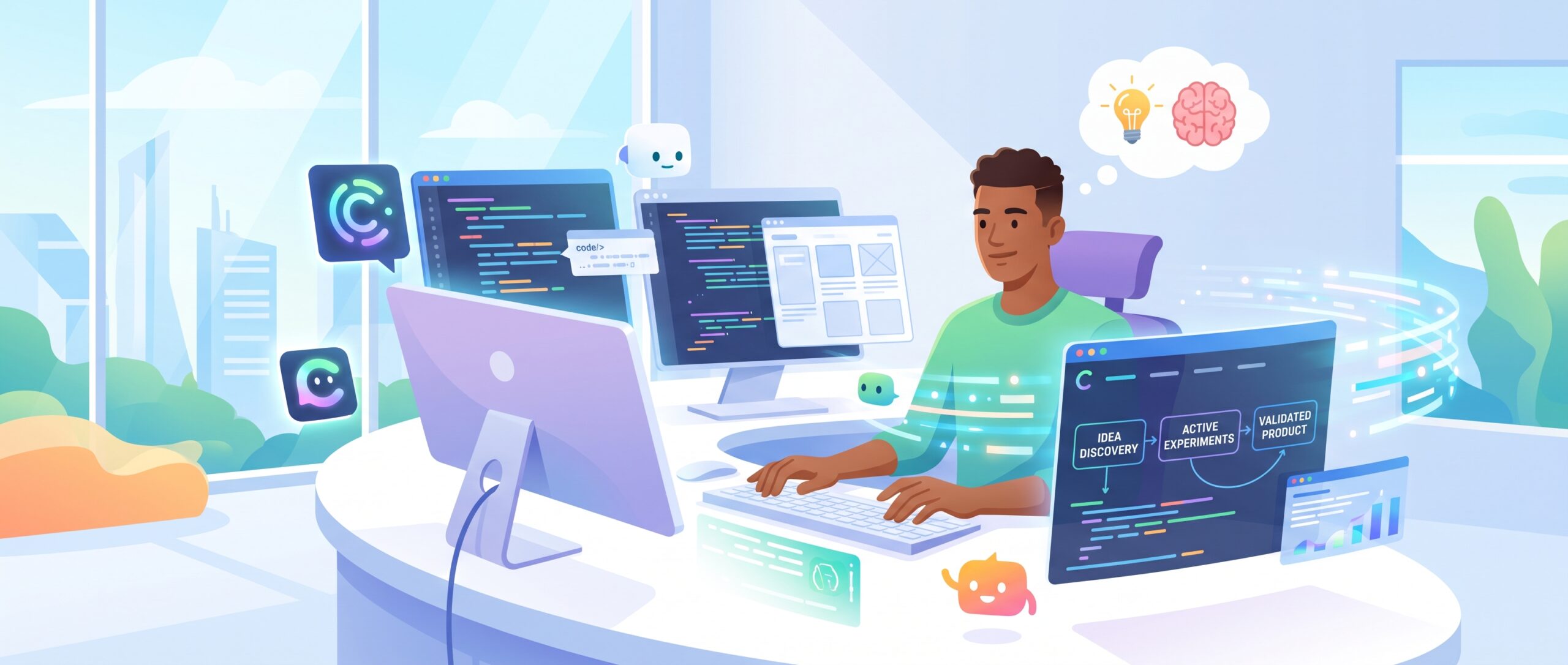
In reality, building software is a collision. Business and engineering wrestle in the arena to decipher what stakeholders actually need. For years, navigating that ambiguity carried catastrophic costs when assumptions were wrong, training organizations to demand extensive upfront planning merely to control the expense of change. Today, that upfront analysis delivers diminishing returns. Software development never happens in a vacuum; it operates inside sprawling legacy architectures, conflicting priorities, and turbulent markets. Neither side can predict a perfect destination in advance. Embracing uncertainty is no longer a strategic debate. It is baseline reality. Tools like Claude Code and GitHub Copilot fundamentally upend that dynamic. Instead of waiting for finished specifications, engineers step up and take charge of discovery. By shifting to rapid, tangible prototyping, they pull business partners out of abstract documentation into an active product engineering mindset. Engineering, business, and autonomous agents collaborate directly, validating hypotheses through live experiments, prototypes, and working code far faster than old development cycles ever permitted. Yet changing how we produce software shatters traditional operational habits. When developers deploy multiple agents to amplify their capacity ten times over, a single engineer can push thousands of changes in a single day. Standard code review paradigms instantly buckle under that volume. Moving at this velocity is unsustainable without robust standardization, disciplined scaffolding, and automated quality controls established from day 1 to contain technical debt. Furthermore, making agents truly effective requires granting them direct, consequential access to core systems. That brings teams face to face with the hardest cultural hurdle of all: institutional trust.
Yet through all the automation and speed, the primary engine remains the human mind. Authorship belongs firmly to the engineer. AI is the latest tool in our engineering kit, but translating messy real world ambiguity into elegant solutions requires human judgment, domain mastery, and craft. Winning the engineering culture shift is only half the battle. In Part 5, we will explore how to take these hard won technical capabilities and expand them across the enterprise, enabling the broader business to harness agentic power without breaking operational stability.
Comments are closed!