
 A Beginner’s Guide to the...
Honestly, this was terrible. I just wanted to grasp the language and mechanics of the market, but this failed completely. The whole thing could have been a blog post, so it’s definitely not worth the credits.
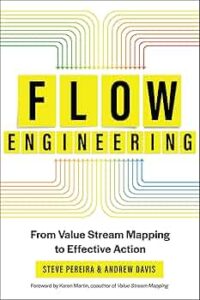 Flow Engineering: From Value Stream...
It wasn’t a riveting read, and you need Team Topologies as a prerequisite. Where Team Topologies tells you how to structure teams, Flow Engineering provides the specific workshops (The 5 Maps) to identify what is slowing them down. It’s a practical toolkit for finding waste.
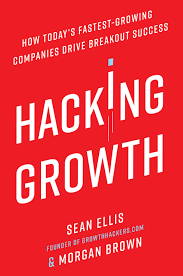 Hacking Growth
This book outlines the solid framework for rapid prototyping. It breaks down the silos between marketing and engineering, proving that growth is a programmable habit, not magic. I loved the practical examples like Airbnb and Dropbox. It’s essential for understanding how cross-functional testing creates a high-tempo engine for scaling products.
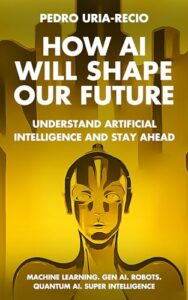 How AI Will Shape Our...
The audiobook sounds like a robot, and the narrator actually burps a few times. But if you can get past that, the constant science fiction references, and the chapter on cyborgs, it’s actually good. It provides a history of AI—even I underestimated how long it’s been around—and makes regression models...
 Inspired: How to Create Tech...
This feels too narrow. While considered a classic, it focuses excessively on the specific role of the Product Manager, often at the expense of the broader Product Team and the actual mechanics of the discovery process. It’s not a great read on its own; you are better off skipping this...
 Inspired: How to Create Tech...
Much like Inspired, this suffers from a limited view. It doubles down on the Product Manager hierarchy rather than truly addressing how to empower the entire team or improve the discovery workflow. It’s not a great book; Transformed is the superior choice because it captures the key takeaways from this...
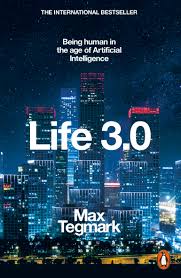 Life 3.0
This is a really good book that unpacks what intelligence actually means. I didn't care for the fake scenarios, but it does a great job outlining where modern AI is at. The physicist's perspective comes through strong in the narrative, giving a solid grounding in the science of it all.
 Measure What Matters
I’m a huge fan of this book because it treats OKRs as a feedback loop, aligning engineering with business strategy. It proves that collaboration—not strict top-down orders—drives results. The "sense, measure, act" cycle ensures we deliver robust value rather than just noise. A practical, necessary read for leaders.
 No Place to Hide: Edward...
This is a real eye-opening, sobering look at privacy, specifically the part technology played. It’s even more relatable coming from a software background because it details how they exploited the actual software and underlying telecoms infrastructure. It shows how the surveillance was physically architected into the network.
 Pattern Breakers: The Secrets Behind...
This wasn't the most memorable book, but it was good. The big takeaway for me was the concept of 'inflection points'—learning to identify massive external shifts before anyone else does. It challenges the usual "best practices" advice, which was refreshing. It’s not perfect, but that specific insight on timing...
 Playing to Win: How Strategy...
This is my favorite strategy book. My biggest take was the Strategic Choice Cascade—how it forces a choice and validating those choices through engagement. I also really liked the group strategy sections, like the Gillette example.
 Superagency: What Could Possibly Go...
I quite enjoyed this book, it focused much more on the socio-economic concerns and ethics of AI. I really liked the breakdown of the "Zoomer, Doomer, and Gloomer" perspectives. It's great for non-techies who want to understand modern LLMs without the technical heavy lifting.
 Team Topologies: Organizing Business and...
This reads like a technical manual and is heavy on jargon, even for techies, but it’s worth the read. It centers on Conway's Law—the idea that your system design inevitably copies your communication structure. It explains how to structure teams to handle cognitive load and ensure fast flow.
 The Basics of Bitcoins and...
This was a cool way of demystifying crypto, especially if you have an engineering background. It highlights that the tech is really just the cryptography we've been dealing with for decades, like encrypted keys. It also does a good job explaining money mechanics. An ok read.
 The Book on Rental Property...
This is a staple for the buy-and-hold strategy. It breaks down the four wealth generators really well, shifting the focus from speculation to cash flow. My biggest takeaway was the "100-10-1" rule—treating deal finding like a sales funnel rather than a treasure hunt. It makes the math the only thing...
 The God Delusion
Widely regarded as the atheist manifesto (Just Kidding), this book leans into creationism. It argues the natural world is beautiful enough without "fairies". Even with the aggressive tone, it’s a solid science book that champions reality over myth.
 The Greatest Show on Earth:...
One he's calmer works, Dawkins treats evolution like a "murder mystery," using hard evidence to prove natural selection. I like the way he potraise nature’s "gritty indifference," bridging geology and biology to show that the mechanical reality of life—and our common ancestry—is more beautiful than any myth.
 The Lean Startup: How Today’s...
This is a good first-principles book that should be a staple for any software leader. It moves beyond just guessing to a scientific approach. My key takeout was to get out early—shipping fast to test assumptions rather than building in isolation.
 The Product Mindset: Succeed in...
The distinction between an 'IT Mindset' (focusing on projects) and a 'Product Mindset' is the standout idea here. But beyond that core concept, the content failed to make a lasting impression. Since the insights didn't stick, it’s hard to rate this as a highly recommended read.
 The Selfish Gene
This is a great science book that redefines Darwinism through the "gene's eye view." It argues that everything—even complex behavior—comes down to the survival of the gene. It shows we are just "survival machines" for our DNA, explaining the deeper mechanics of life really well while still bashing religion in...