
I've been observing a powerful signal from our next generation of talent. I recently attended the showcase at my alma mater, UCT and their School of IT, for the second year in a row, and have been mentoring students from Varsity College. I'm also fortunate enough to have two graduates from both institutions in our own graduate program. Across all these groups, over a two-year period, a single, powerful theme was unavoidable: AI.
It was insane to see the sheer breadth of its applications. At both showcases, booth after booth featured students using tools like Claude and Gemini for an incredible range of applications: detecting tumors in brain scans, AI-enabled learning platforms, low-cost connectivity solutions, a myriad of medical, agricultural, transport, retail and telecoms applications.
What's truly surprising is who is using it. This wasn't isolated to the tech students. It's happening across faculties with AI being part of the humanities course work. The trend continues right into post-graduate studies—I'm heading back to UCT for my MBA at the Graduate School of Business next year, and it's unsurprisingly already made it into the GSB curriculum. There are elective modules on AI that I’m hoping I’m smart enough to get into.
This pervasiveness is the profound shift. It's not a niche skill; it's a fundamental part of their new toolkit.
This is exciting. Universities build the foundation (the "what"); the hard-won, decade-long skill of deep systems integration (the "how") is something that can only be learned in the field through years of practice. Personally, developing graduates into competent, capable engineers is the part of my job I most enjoy.
It's also reassuring how openly the "should we or shouldn't we use AI" debate is being handled—it's a hot topic in academia, just as it is in industry. I had a great chat with graduates from our UCT project we sponsored—they built an AI learning platform that won 3rd place at the showcase—and it was great to see them being actively afforded the opportunity to use the tech.
This new reality presents the real leadership challenge. For decades, our instinct as leaders has been to teach new grads how to use the "hammer"—the proven tools, patterns, and methods we used to build our careers.
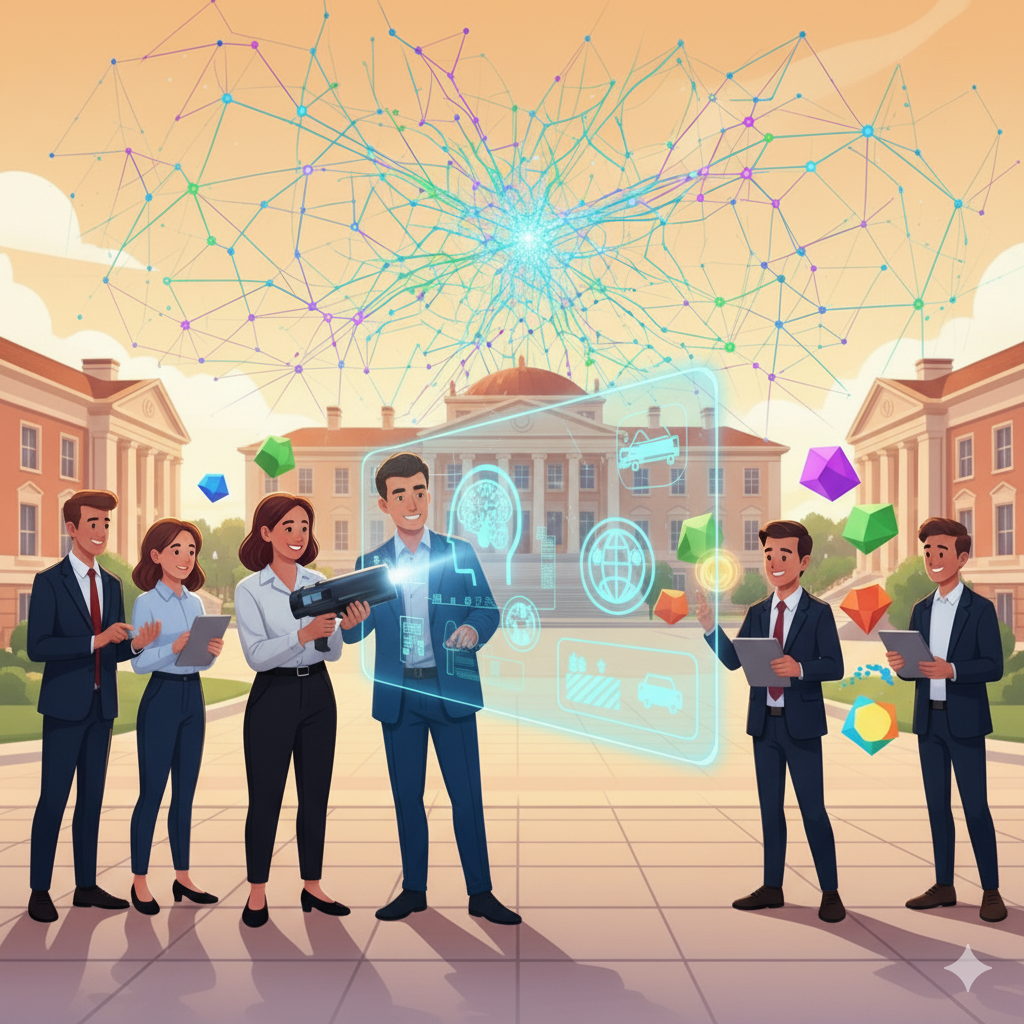
But these graduates aren't showing up with another hammer. They're showing up with a "nail gun."
Our temptation might be to teach them how to use it like a hammer, or to put it aside and learn our "hammer" first. But the real opportunity is to shift our own focus. The challenge is to learn what this new tool is, right alongside them.
This adds a new, exciting layer to our craft. We still hold the map; we know the "why" and "where" of our complex enterprise world. The exciting part is that we can now guide these "AI Padawans" on where and how to point their nail guns, while we’re all learn how this new tool works best.
The foundation has changed. The graduates are here, thinking differently. This isn't a "problem" of a skills gap. It's an opportunity to evolve our craft, and it requires us to become learners again, right alongside our newest hires.