
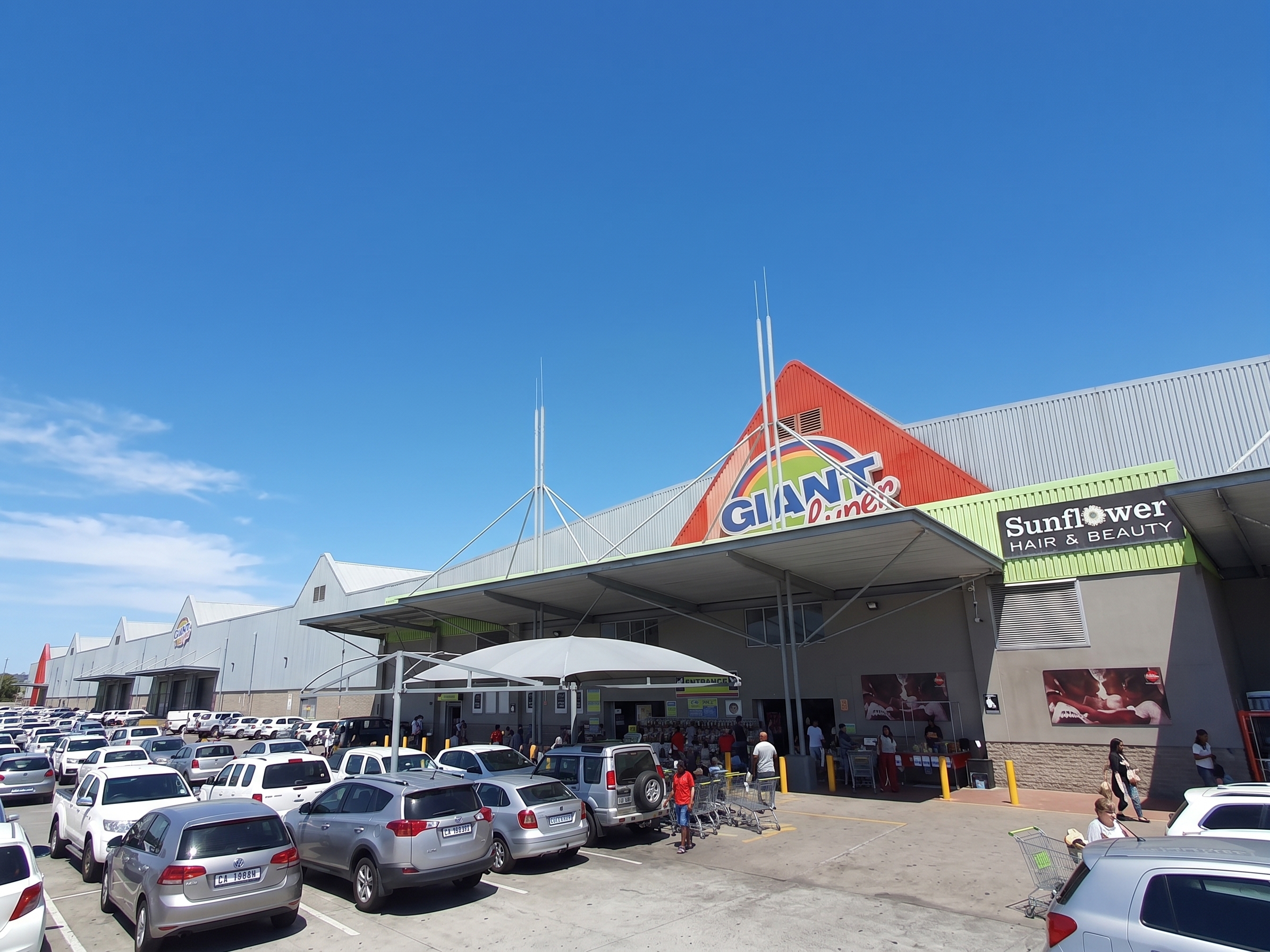

The informal economy of Cape Town does not operate like a spreadsheet. It moves like a massive biological organism. Walk the floors of Jumbo Cash and Carry or Giant Hyper in Epping and the sheer scale hits immediately. These wholesale depots act as the beating heart of the system, pumping essential goods through arterial routes into major regions like the Cape Flats and the Northern Suburbs.
The parking lots themselves are a testament to this engineered chaos. Store yards use discarded pallets and stray trolleys to mark out makeshift lanes for massive delivery trucks. In the remaining spaces, fleets of bakkies and hatchbacks sit crammed to the brim with stock. Over at 1Up, the environment is a synchronized flurry of movement. Forklifts looking like they just rolled out of a destruction derby dodge vehicles to load towering pallets of Coke. The entire yard is a mad and nerve wracking gauntlet. Step inside and the auditory assault is instant. The air is thick with activity, punctuated by the clatter of carts and the overlapping rhythms of a dozen distinct languages echoing down the aisles. Look closer at who is pushing the trolleys. You rarely find an isolated shopkeeper. Instead, you see multigenerational families and tight knit syndicates working side by side. Grandparents, parents, and grown children divide the aisles to restock as a collective unit. In one corner, a Pakistani trader maneuvers a fleet of four trolleys with the help of his community.
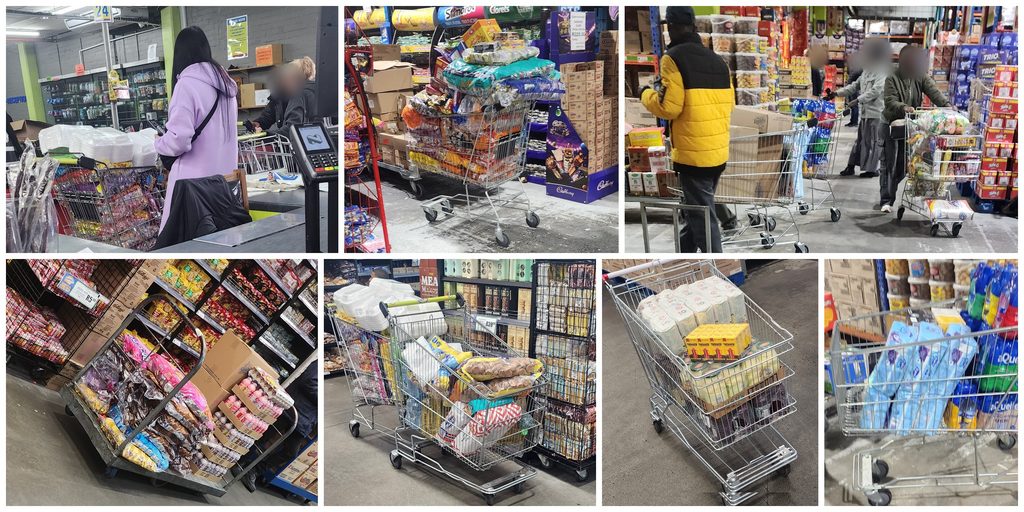
The inventory shifts dramatically depending on the depot. At Jumbo, bulk liquor buyers dominate the lot, packing cases of wine into hatchbacks. At Giant Hyper and 1Up in Epping, the pulse belongs to the Cape Flats spaza network. The aisles are dominated by pure essentials like massive sacks of maize meal and drums of cooking oil. Travel out to the depot serving the Northern Suburbs in Kraaifontein, and the profile pivots entirely. Here you see older shopkeepers and mini mall takeaway owners loading up on retail confectionery, cases of chocolates, and bulk sacks of frozen chicken strips for corner fryers. Trying to pierce this network from the outside reveals just how insulated it is. Attempting to chat with a spaza operator from the deep Cape Flats becomes an almost impossible task through the wall of language and the frantic pace of the floor. The only concrete detail pulled from a brief exchange is the rhythm of his business, doing supply runs just three times a month.
The purchasing volumes shatter standard retail assumptions. Buyers are not making small daily top ups. Basket sizes scale from thirty five hundred rand up to massive thirty thousand rand trolley loads. This incredible volume is carried by large canopy bakkies, consolidating transport for multiple shops across the metropole.
This ecosystem thrives entirely outside formal corporate frameworks. It does not need rigid structures to move millions in capital. It relies on shared ties, human trust, and collective community action. It is a powerful, decentralized economic engine operating right out in the open.